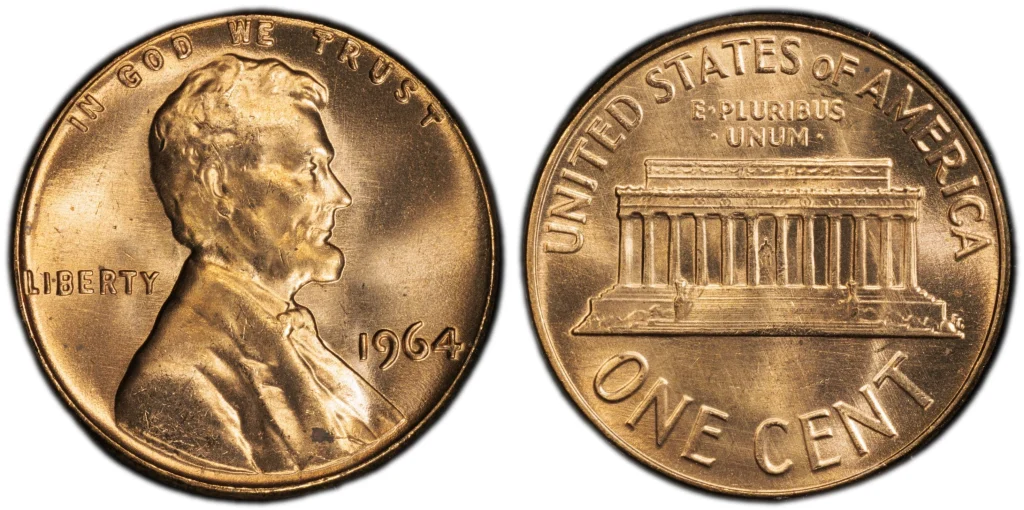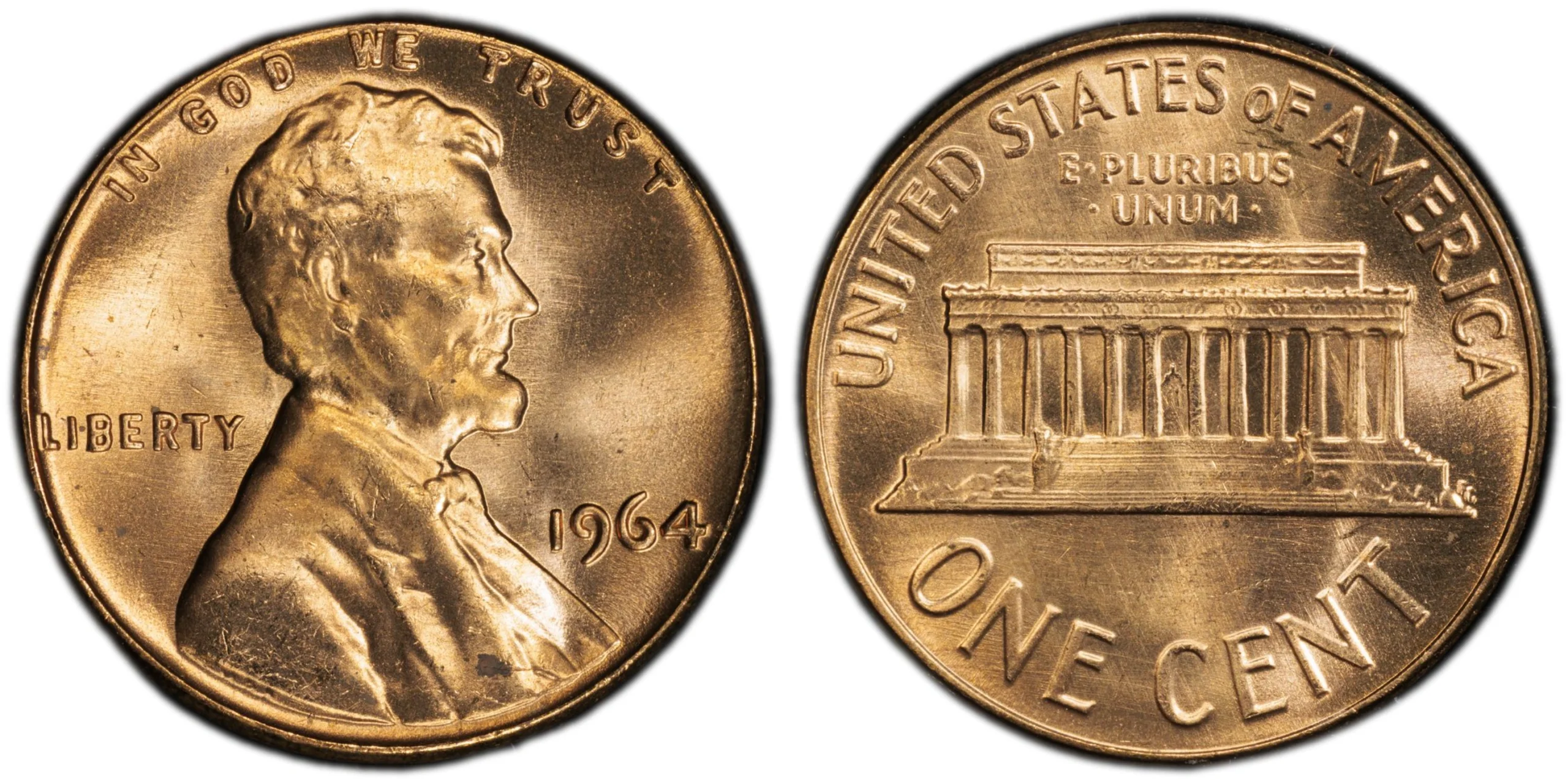
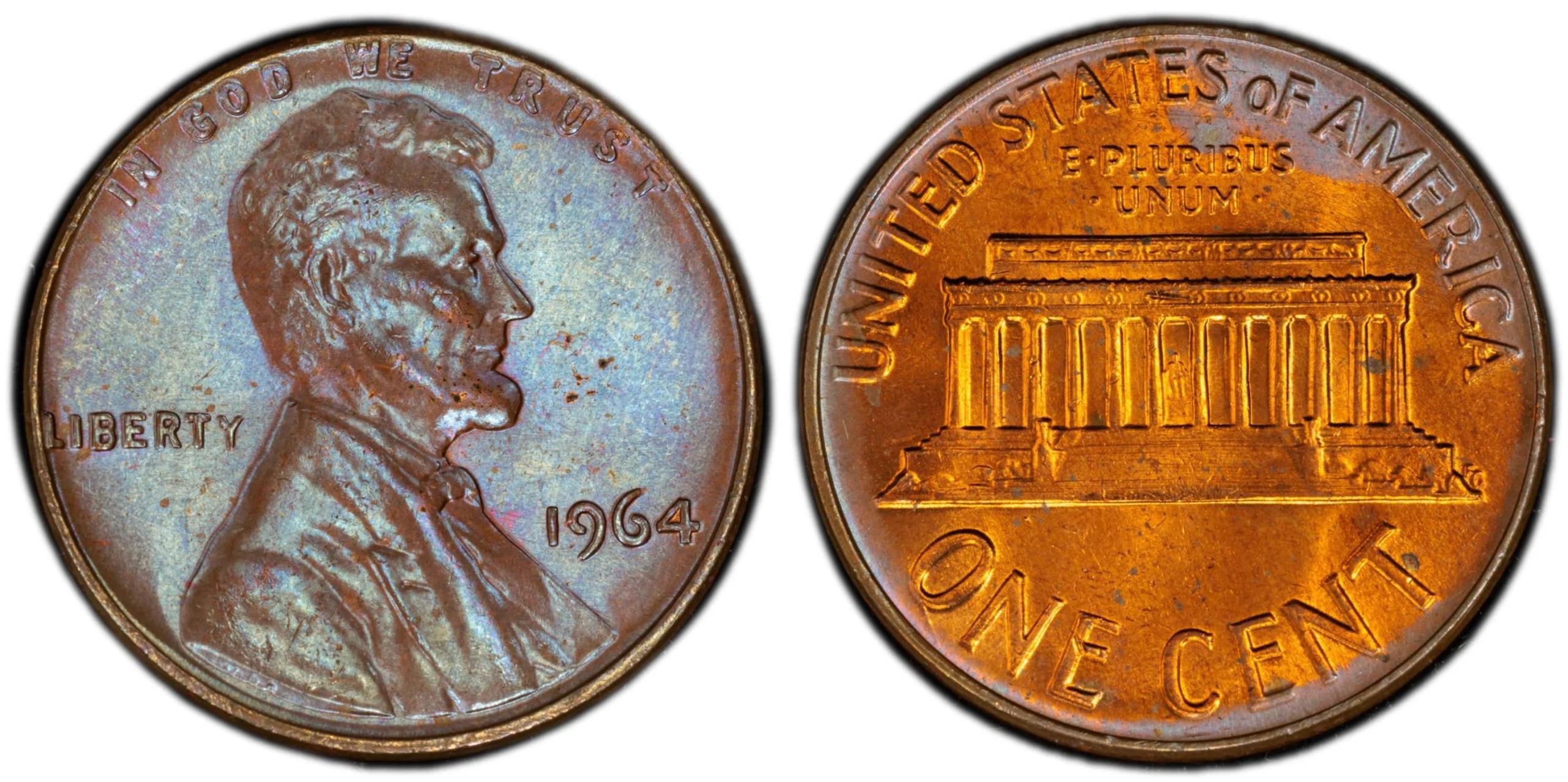
The 1964 Lincoln price starts from 1 cent, but if you have a rare DDO or off-center error, your item will cost more than $200.
1964 Item Overview
How much is a 1964 penny worth on the modern numismatic market? To answer the question, you need to compare your item characteristics with the table below.
| Year | 1964 |
| Diameter | 19.05 mm |
| Weight | 3.11 g |
| Edge | Plain |
| Composition | Mostly Copper |
Standard 1964 Penny Values by Grade
Two types of standard coins exist:
- Circulated
- Uncirculated
Circulated coins show physical signs of friction from pockets, cash registers, and general commercial use. When a 1964 penny enters this stage, it loses its top status. Collectors do not pay bonuses for worn pieces because billions of uncirculated examples still reside in bank vaults and original rolls.
1964 Lincoln Penny Value Chart
| Grade | Philadelphia | Denver |
| MS-63 Brown | $0.20 | $0.15 |
| MS-63 Red-Brown | $0.50 | $0.40 |
| MS-65 Red | $10.00 | $8.00 |
| MS-66 Red | $35.00 | $25.00 |
| MS-67 Red | $350.00 | $280.00 |
Why Brown 1964 Pennies Hold Minimal Premium
When environmental exposure covers more than 95% of the coin’s surfaces, it turns a full chocolate color. PCGS and NGC label these specimens as Brown.
Even if a brown coin retains razor-sharp design details, it rarely commands a premium price. Environmental tarnish masks the visual appeal that registry-set collectors crave.
The SMS Penny
The absolute monarch of the 1964 penny series did not arrive via standard production loops. The US Mint suspended regular proof sets due to the national coin shortage. The mint created a small, undocumented batch of prototype coins that numismatists call the Special Mint Set or SMS.
Visual Identifiers of an SMS Penny
Unique SMS physical structure contains:
- A smooth, non-reflective satin finish across its fields
- Sharp details on the Lincoln’s bust
- Sharp details on the Lincoln Memorial
- Perfectly square, crisp rims
1964 Lincoln Penny Errors List
Doubled Die Reverse
A doubled die error occurs when a steel die receives a misaligned second impression from the master hub during the manufacturing process. The 1964 penny features several prominent Doubled Die Reverse or DDR varieties.
To spot these varieties, examine the reverse side under magnification. Look for distinct separation lines and thickness on the letters of the motto and the denomination text.
Item Value $100–$500
Off-Center Strikes
Striking errors happen during the high-speed mechanical operation of the coin presses. You get a coin with a partial design if the machinery fails to center the copper planchet between the dies. A 1964 penny that sits 50 % off-center but still displays a clear date can fetch more than a hundred dollars.
Item Value $150–$250
Clipped Planchets
This error occurs when the metal-cutting feed leaves a crescent-shaped bite out of the edge of the coin blank before the strike.
Item Value $30–$75
Wrong Metal Errors
The ultimate prize for an error hunter is a transitional or off-metal strike. This happens when a blank intended for a different coin denomination drops into the 1964 Lincoln cent press.
The most famous example occurs when the 1964 penny die strikes a silver Roosevelt dime blank. The resulting coin shows a silver color, weighs less than a standard copper penny, and cuts off the outer portion of the design.
Item Value $1,000
Identifying the Mint Marks: Philadelphia vs. Denver
To correctly evaluate your 1964 penny, you must determine its origin. Look at the obverse side of the coin, directly beneath the digits of the “1964” date.
| Feature | Philadelphia | Denver |
| Mint Mark | No Mint Mark | D |
| Physical Location | Directly below the “1964” date | Directly below the “1964” date |
| Total Mintage | 2,641,566,000 coins | 3,799,071,400 coins |
| Common Production Flaw | Planchet scratches and bag marks | Severe die fatigue and mushy details |
| Collector Focus | Flawless surfaces | Flawless surfaces |
The 1964-D Die Fatigue Factor
The workers ran steel dies long past their recommended lifespan. This intense usage caused severe die fatigue, which resulted in coins with weak details, orange-peel textures, and soft letters. Because of this widespread die fatigue, a D penny that retains razor-sharp detail and brilliant luster represents a true condition rarity.
Should You Pay to Grade Your 1964 Penny?
Evaluating Your Coin with a Special Numismatic Equipment
Professional grading requires upfront capital, shipping costs, and insurance fees. Therefore, you must screen your coins with extreme care. Sit under a bright light source and examine your 1964 penny through a loupe.
Calculating Grading Fees vs. Potential Market Return
Do not submit common uncirculated 1964 pennies that fit into the MS-60 to MS-64 range. As the value matrix shows, these coins only carry a value of a few cents to a couple of dollars, while grading fees often cost $20 to $30 per coin.
You should only submit a 1964 penny to PCGS or NGC if you suspect the coin can secure an elite MS-67 Red grade, displays a major doubled die, or matches the square-rim profile of the SMS prototype.
Where to Buy the Lincoln Penny
Littleton Coin Company – excellent for collectors seeking clean, individual business-strike or proof examples to fill gaps in a Whitman or Dansco album.
APMEX & Pinehurst Coins – while known mostly for precious metals, these large distributors frequently carry certified modern proof coins and uncirculated year sets that include a pristine 1964 cent.
eBay – the largest marketplace for bulk lots. Look for listings specifying Original Bank Wrapped Rolls or original mint bags. You can also easily find certified 1964 Proof cents PR-67/PR-68 here for $15 to $35.
Heritage Auctions – the premier destination for record-breaking numismatic assets. If a 1964 SMS penny or a high-value transitional error hits the market, it usually happens here.
Stack’s Bowers & David Lawrence Rare Coins – firms hold regular online auctions featuring highly accurate cataloging for condition rarities.