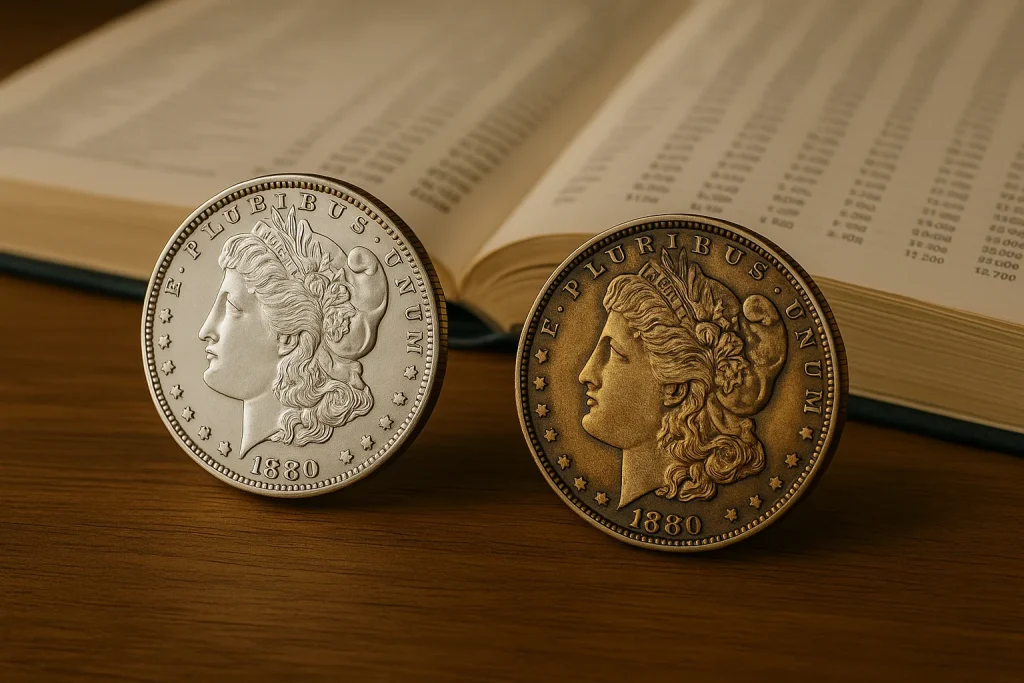
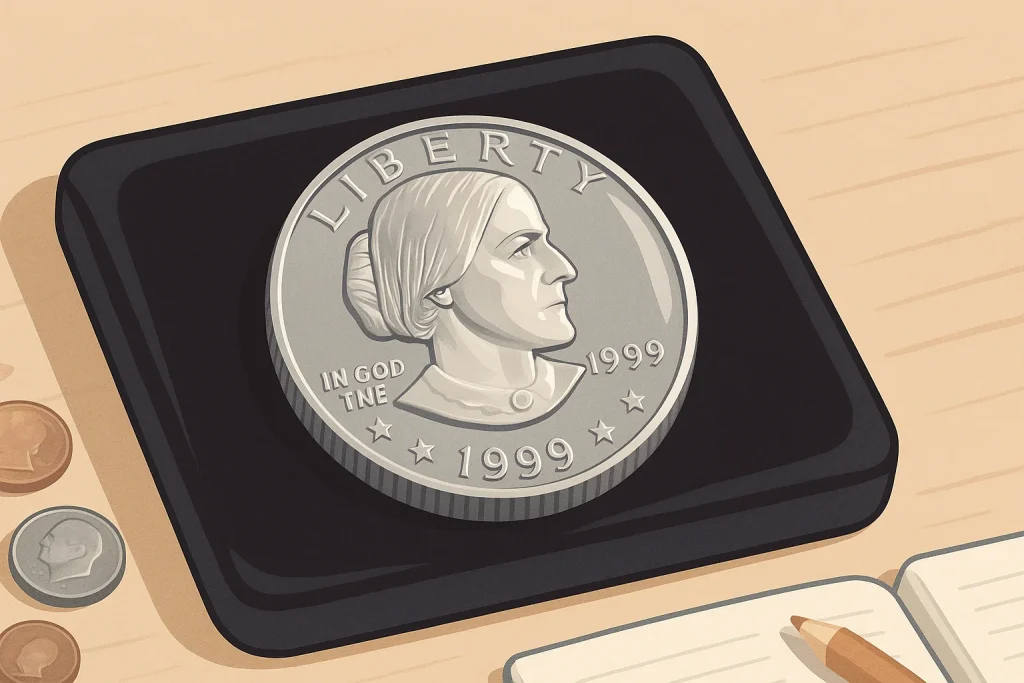
Collectors often check basic prices through a coin values app to understand where a coin might fall on the market. This helps set expectations, yet it does not explain why two pieces of the same date and mint can end with very different numbers. The reason is simple: coins that look identical from a distance rarely behave identically under close inspection. Small differences in strike, surface, tone, eye appeal, grade distribution, and survival lead to wide price gaps even within a single issue.
So, it will be quite useful to understand some factors affecting costs and how they combine into real market behaviour. The structure follows the practical way collectors examine coins: first, the visible traits, then condition-specific features, then deeper characteristics that influence long-term demand. The goal is to show why one coin sells instantly while another sits unsold at a higher grade on paper.
Why Price Differences Appear Between “Identical” Coins
Coins start their life differently. Dies wear at different speeds, presses strike with slightly uneven pressure, and planchets vary from batch to batch. After leaving the mint, each piece gains its own storage history, circulation marks, colour changes, and micro-damage.
Even two fresh examples can drift apart due to:
- Strike strength (full details vs. shallow relief);
- Surface quality (micro-marks and abrasions);
- Eye appeal (balance, brightness, and first impression);
- Tone behaviour (natural vs. chemical);
- Survival level (how many similar coins exist at the same grade).
Buyers pay for the complete combination, not the date alone. This is why two MS63 coins can sell with a noticeable gap and why grade labels never tell the full story.
Price-Shaping Factors: What Actually Moves the Market
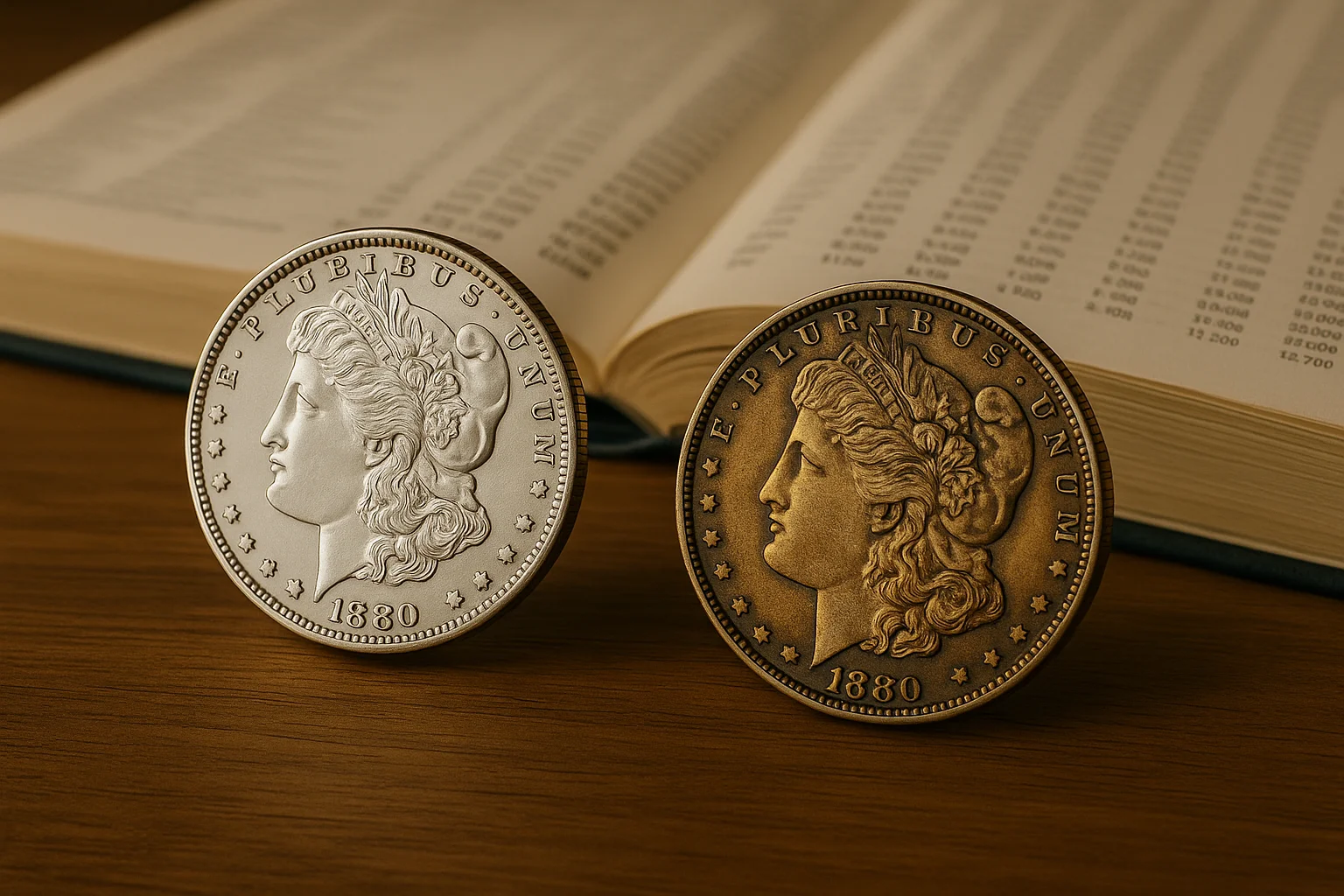
Coins that look identical on the surface rarely behave the same in real auctions. Even pieces from the same year and mint can drift apart in price once collectors look closer at the strike, the surface, the colour, and the overall preservation. These elements form the core of market behaviour and explain why two specimens of the same type can fall into different price tiers. Each factor works independently and creates a separate influence on demand, so understanding them helps read the true value behind any coin.
Strike Quality: Why Strike Creates the First Gap
Strike refers to how well the dies transferred detail into the metal. A strong strike shows full hair strands, shield lines, feathers, and denticles. A weak strike leaves those areas flat, even if the coin never circulated.
A short comparison:
| Feature | Strong Strike | Weak Strike |
| Detail | Sharp and full | Soft, shallow |
| High points | Clear | Blurred |
| Visual effect | Looks fresher than grade | Looks worn, though uncirculated |
Collectors favour strong strikes because they show the intended design. Weak strikes often look tired and can reduce the price even within the same technical grade.
Surface Preservation: Micro-Marks and Their Weight in Pricing
Surfaces reveal much more than strike. Coins pick up marks in bags, rolls, counting machines, and pockets. Under soft light, each flaw becomes visible. Surfaces often define the starting price tier because they reflect how the coin lived.
Main elements collectors check:
- Marks in open fields;
- Friction on high points;
- Scuffs from contact with other coins;
- Minor scratches are visible under the tilt.
A coin with clean fields and uniform texture looks more stable and sells faster. A coin with scattered marks may still grade high, yet buyers often avoid it because the overall look feels busy or inconsistent.
Eye Appeal: How Visual Balance Influences Demand
Eye appeal describes the general impression. Some coins look balanced, bright, and stable under light. Others look dull or uneven. Buyers react quickly to this difference.
What strengthens eye appeal:
- smooth fields without spots;
- stable brightness across the surface;
- clean transitions between devices and fields.
Two coins with identical grades can show different “presence”. The one with a stronger appeal attracts immediate attention and rises to the top of the price range.
Toning: When Colour Helps and When It Hurts
Tone develops naturally over time. It can improve visual depth or reduce it. Buyers reward natural tone that grows gradually and evenly.
A small reference table clarifies the difference:
| Tone Type | Effect |
| Natural, layered | Adds depth and interest |
| Uneven or spotted | Reduces appeal |
| Artificial or chemical | Creates distrust and lowers the price |
A silver coin with a soft golden or blue tone can outperform a bright white example. A coin with a dark or blotchy tone can lose momentum even if the strike is excellent.
Grade Distribution: Why Condition Scarcity Matters More Than Mintage
Some dates exist in large numbers, yet few survive in strong condition. Other dates may be scarce in general, but common at mid-grades. Because of this, price jumps often happen between XF, AU, and MS levels.
Patterns collectors often see:
- Wide populations in VF–XF but thin in AU–MS;
- Sharp price increase between AU58 and MS62;
- Stable mid-grades but high-grade scarcity.
Grade distribution explains why an AU example can cost more than a common MS coin from another year. Buyers compete for the best survivors, not the general mintage.
Survival Patterns: Real Availability Beyond Mintage
Mintage shows how many coins were struck. Survival shows how many remain today. Many coins with high mintages lost most of their population through melting, corrosion, and long circulation. Some coins remain common in low grade but rare in an attractive state.
Collectors pay attention to:
- How many pieces appear in the same grade level;
- Whether the date often shows heavy wear;
- How storage habits affected each generation of coins.
A date might seem ordinary on paper, yet scarce in well-preserved form. This scarcity shifts the price structure even without a low mintage.
Authenticity and Provenance: Small Details With Large Impact
Authenticity checks start with weight, diameter, thickness, metal behaviour, and edge texture. Any deviation raises doubts and lowers the price immediately. Collectors also look at provenance. Coins with documented history or a known storage background inspire more trust.
Elements that influence price:
- Accurate measurements;
- Natural metal tone under rotation;
- Stable storage record;
- Inclusion in a known collection.
These traits do not change the grade, yet they influence buyer confidence and, thus, the final number.
Why Apps Don’t Explain These Price Gaps
Photo-based tools help identify coins, but they do not evaluate surface depth, subtle marks, tone complexity, or strike strength. A coin identification app recognises the layout and confirms the type. It shows a typical range based on sales. These tools focus on the model, not the specimen.
Digital tools help when sorting large batches, checking world coins, or confirming parameters. They do not judge natural patina, detect weak strikes, or read eye appeal. For that reason, their numbers represent a simplified starting point.
Coin ID Scanner supports the earliest stage by capturing clean identification, confirming official specs, and storing images for comparisons. It helps avoid mistakes when several varieties look similar. Final price still forms through physical inspection and market analysis.
Where Apps Fit Into the Process
A coin value checker app, of course, speeds up early research. They confirm the correct type, outline the expected value corridor, and prevent confusion between similar designs. After this, the collector handles the real work: judging the strike, reading the surfaces, evaluating the tone, checking survival behaviour, and comparing actual sales.
When both approaches work together, pricing becomes predictable. The app sets the foundation. Manual inspection defines the premium. Market data confirms the result.
How to Evaluate Two “Identical” Coins Side by Side
When two coins share the same date and mint, a direct comparison shows the real price gap. A practical method uses a short sequence:
- Start with the strike.
Look at hair, feathers, shield lines, or other high-detail areas. One coin usually shows deeper relief.
- Compare surfaces.
Tilt each coin under soft light. Marks appear differently on high fields and protected areas. Look for scuffs, dents, and friction patterns.
- Judge an eye appeal.
Check the brightness, balance, and tone. One coin often looks “cleaner” even at the same grade.
- Evaluate colour and tone.
Natural tone looks layered. Harsh tone looks flat or burnt. Artificial tone looks uniform and unnatural.
- Check wear patterns.
Evaluate how evenly the coin aged. Sharp edges and clean lettering signal better preservation.
- Compare with market sales.
Completed listings show the real curve for this grade. A coin with stronger visuals always goes to the higher end of the range.
This method shows how quickly two coins diverge once you examine them side by side. Many price differences that look mysterious on paper become obvious under soft, even light.

Why Coins Rarely Behave the Same
Two coins may share a date, mint mark, and even the same certified grade, yet their market behaviour differs. Strike, surface quality, tone, eye appeal, survival patterns, and authenticity build separate identities for each specimen. These traits determine buyer interest and shape the final number far more than the date alone.
Apps help establish structure, confirm the type, and show a realistic starting range. Physical inspection and market comparison reveal the rest. Try to combine both methods to understand why one coin rises above the other and how real value forms in practice.